The highpoint of last year's 11th Aspac Exhibition and Convention in Takamatsu was a visit to Takasago-an on the last day, to conclude a massively successful event. I am sure most of the about 1,000 participants from all over the world, like me, went home happy and satisfied. Takasago-an is the World renowned bonsai garden cum residence of the late and well-like Daizo-Iwasaki. Besides the numbers of award winning bonsai and master pieces, there are about 500 top class bonsai. I found a new meaning to addiction to bonsai. Here are some photos to share the beauty of this massive and impressive collections. CJ.
Wednesday, June 20, 2012
Saturday, June 16, 2012
Work to Improve a Shohin Wild Olive Bonsai
This shohin wild olive was dug about 7 - 8 years ago. It is 17 cm tall and the base is 8 cm. Yesterday I spend 1.5 hours working on this fella.
This is how it looked like before work begins.
First I cut of this chunk with a saw.
Then I used my Dremel to carve the trunk into shape.
Today I spend another 1.5 hours working on the tree. I did some detailed carvings and then wired. The tree will now be rested for it to recover. Always remember the survival of the tree is paramount. So try not to do too much nor push too hard. If the tree is dead, all your years of efforts will be wasted.
Then I will feed it heavily to improve the ramifications. They are very greedy and love an inch or two of dynamic lifter. Use the 2 x 2 approach to improve the branch structure. Basically 2 x 2 involves cutting a growing branch at the right place, to induce two new branches to grow. The process is repeated. So from 1, u get 2. From 2 u get 4. From 4 u get 8 branches.
Next is to put it into a nice pot. I am currently thinking of putting it into a round terracota pot of 6 - 8 cm thick by 10 - 12 cm wide. Round pots generally go well with small trees. Of course the best approach is to get a few pots, put the tree into each and then decide. Pot selection is just like chosing a dress. Does it looks good ? Always remember the pot must enhance the beauty of the tree.
The tree after 3 hours of work.
A closed-up of the detailed carving.
These are the carving tools I used. A Dremel with 5 different type of bits. The first on the left was bought on the internet. 2nd to 4th was bought from a Japanese Shohin Bonsai Master who has these specially made for himself. He was very kind to let me have one set. The last is a Dremel bit which can be bought from Dremel dealers. CJ.
Sunday, June 10, 2012
Adachi Museum of Art
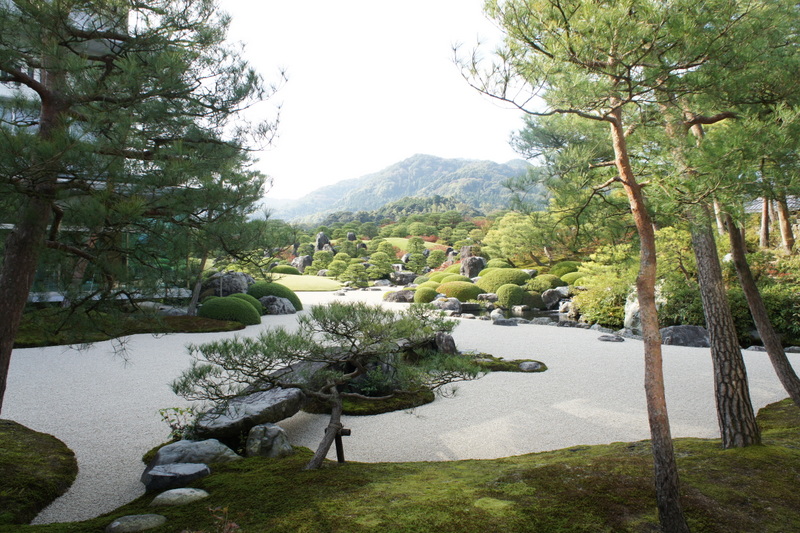
In Nov last year I attended the 11th Aspac convention in Japan. As part of my tour, we visited the Adachi Museum of Art. They have a very impressive collections of paintings. However what impresses me most is the Garden. Exquisite ! The best I have seen so far. No wonder it was honoured as the best Japanese Garden for eight consecutive years by the Journal of Japanese Gardening. Some photos to share the beautiful scenaries.
Saturday, June 9, 2012
11th ASPAC Convention And Exhibition
In Nov 2011, I attended the 11th Asia-Pacific Bonsai n Suiseki Convention & Exhibition in Takamatsu, Shikoku Island. It was an enjoyable 4 days event. There are bonsai and suiseki demonstrations and talks by the leading experts from Japan. Exhibitions and other festivities like tours to gardens and bonsai production areas. With over 50 bonsai farms producing fantastic materials and quality bonsai, Takamatsu rightfully claimed to be the top bonsai production area in Japan and thus the world. Of course the sales area got plenty of attention. No where else do u get such a wide range of bonsai, bonsai stocks, tools and utensils on sale. As usual I ended up buying more than my needs and paying for excess lugages. It was such a pity that I cannot buy any of the wonderful materials which were reasonably priced as West Australian quarantine is very strict. Close to a thousand people from all over the world attended. About half from Mainland China. Nice to catch up with old friends and acquaintances and made new ones. Here are some photos of the event. CJ.
Opening Ceremony.
Exhibition Trees.
Sales Area n Trees.
Lots of buzzes were created by the sale of this tree priced at Yen 100 million which is about A$1.3 million at current exchange rate.
Bonsai farm.
Opening Ceremony.
Sales Area n Trees.
Lots of buzzes were created by the sale of this tree priced at Yen 100 million which is about A$1.3 million at current exchange rate.
Bonsai farm.
Thursday, October 20, 2011
A few Shohin Bonsai
I have trees from 5 cm to over a metre. The small ones are easy to handle. The big ones are a challenge especially during photography session. Here are some of my shohin. Enjoy n cheers, CJ.
Pyracantha, 22 cm, trained from $1 nursery stock since 2001.
JBP, 23 cm, trained since 2004.
Lilypilly, 19 cm, trained from $2 nursery stock 2001.
Tiger bark ficus, 20 cm, trained from $4 nursery stock since 1998.
Wild Olive, 15 cm, dug 2001.
Pyracantha, 22 cm, trained from $1 nursery stock since 2001.
JBP, 23 cm, trained since 2004.
Lilypilly, 19 cm, trained from $2 nursery stock 2001.
Tiger bark ficus, 20 cm, trained from $4 nursery stock since 1998.
Wild Olive, 15 cm, dug 2001.
Saturday, October 15, 2011
Blooming Bottlebrush
This Bottlebrush is big, 1 m x 1.2 m. Photographing it is a challenge especially when I have to do it on my own. However the bloom is at its' peak and the urge to capture the beautiful moment overcame the time constrain and the challenge of moving it to my make-shift studio. It was saved from a demolition site in 2001. According to the lady living next door to the demolition site, this tree was planted 50 years ago (as of 2001). So now it is about 60 years old. An expert lady at Friends of King's Park identified it as a Parker's special. Enjoy n cheers, CJ.
Subscribe to:
Posts (Atom)